In 2035, airpower superiority will not be decided by a single platform, a single domain, or a single exquisite capability. It will be decided by whether the Air Force can translate technical possibility into operational advantage, fast enough, coherently enough, and on a scale, under the pressure of a pacing threat that is deliberately hunting our assumptions. This wargame is designed for that purpose: not to generate model-driven “answers,” but to pressure-test emerging technology concepts against real combat problems and “inform future doctrine” until the seams begin to open. Your value at the table is not only what you know, but how rigorously you question what the force believes it knows.
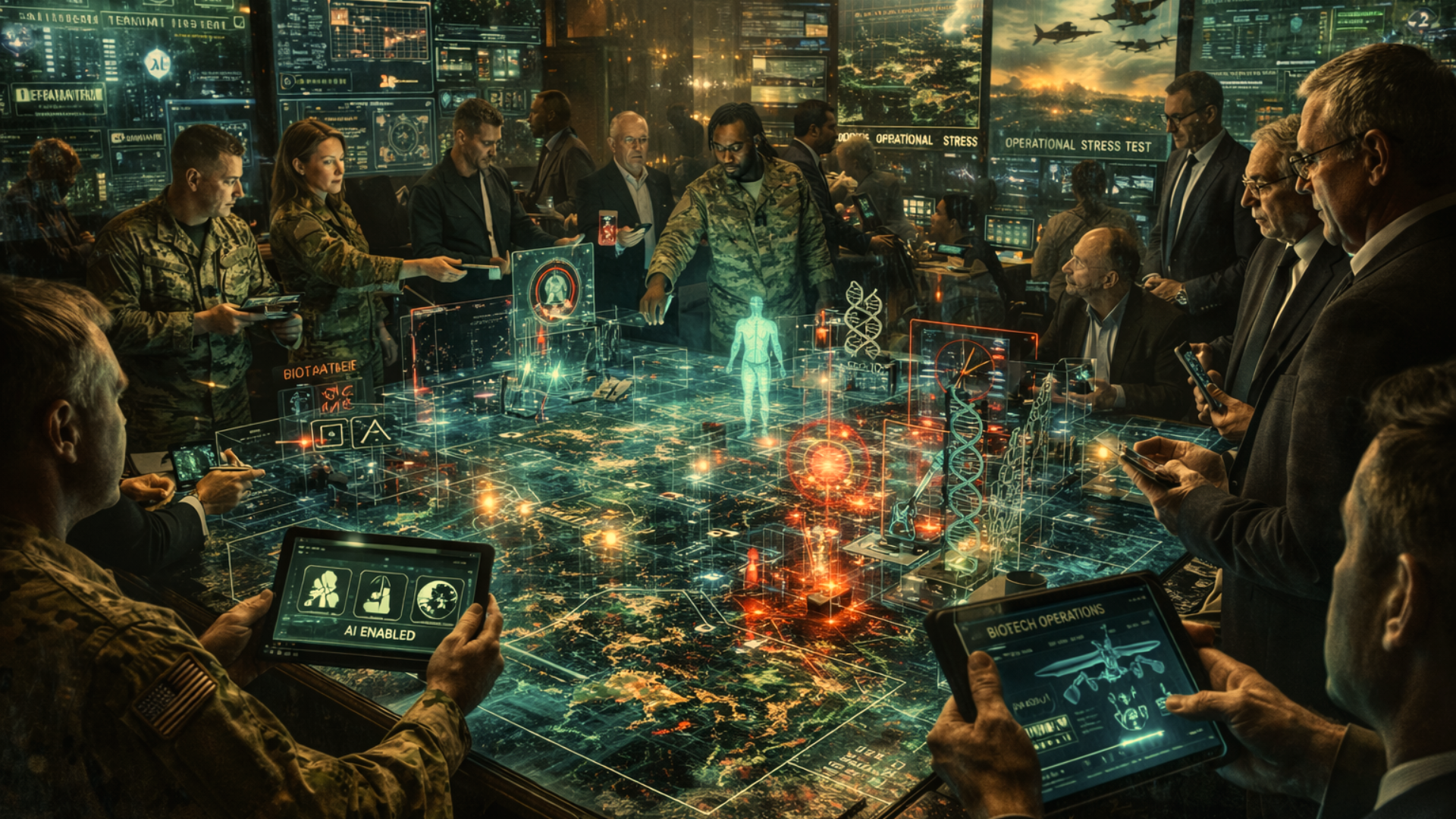
The wargame’s construct is intentionally operational. It begins with bounded scarcity: investment decisions across technology areas force trade-offs that mirror real-world choices, where funding one advantage means accepting risk elsewhere. From those investments beyond 2030, capabilities are “unlocked,” and force design options become available, not as a shopping list, but as a prepared force evolves employment. Finally, the game narrows to a disciplined selection and deployment of discrete capability “cards” across scenario turns. This funnel, investment, unlocks, force design, employment, creates a controlled environment where the most important output is the reasoning the teams think through. This critical discourse will drive the conversation among operators, industry, and academia that surfaces assumptions, exposes second- and third-order effects, and clarifies what must change in doctrine to win.
This effort will demand that participants think in cascading effects, and not in isolated ecosystems or silos. A missed investment in detection, base defense, or logistics resilience can degrade sortie generation, sustainment, and mission execution regardless of how advanced a strike package appears on paper.
Where participants will arrive is in a contested logistics scenario designed to pressure-test the Air Force's Agile Combat Employment capabilities, which has been a challenge over the last few years. This stress test must consider mass fires, sabotage, SOF/OCA pressure, drones and swarms, and even bio threats targeting personnel and fuel. The game’s time-jump mechanic establishes defenses and dispersal, then leaps forward in time to reveal downstream impacts, forcing players to confront an uncomfortable truth: operational tempo is not “generated” by willpower; it is permitted by resilient systems, disciplined Command and Control (C2), and survivable sustainment under attack, and the human in the loop in ever corner of the challenge.
In global strike and strategic attack play, the wargame pushes participants beyond platform-centric planning, like specific aircraft or a finite number, into the real determinants of decisive effects that can deter, deny, and defeat, over and over again. Building upon and thinking in terms of capabilities for targeting quality and authority when disconnected, cross-domain synchronization inside an Anti-Access/Area Denial (A2/AD) environment, sustained capability pulse frequency enabled by additive/advanced manufacturing, and precision options in GPS-denied conditions. It also forces interaction with joint realities of deconfliction across the spectrum of warfare, paired with the choreography of multi-domain sensing, and the human performance limits that govern endurance and decision-making at scale. Its like a fire drill on a mass scale! The doctrinal question we will use as a guide, are not designed to tell us whether we can strike, but how the force designs decision processes, delegations of authority, and resilient C2 such that the strike remains coherent when the network frays, the timeline compresses, and the adversary’s campaign is designed to slow us by confusing us.
This is where the total sum of participants' knowledge, expertise, and technical skills matters. The Air Force does not need futurism; it needs operationally credible pathways, how autonomy changes decision timelines and “man-in-the-loop” assumptions in air and base defense; how logistics command and control survive and adapt; how operational medical doctrine evolves under contested conditions; how decentralized planning at the edge federates into theater coherence. The wargame’s bounded capability menu prevents ad hoc invention, not to limit creativity, but to discipline it, so innovation can be adjudicated, compared, and doctrinally translated. We will test how advanced technologies either assist for success or get in the way.
For industry and academic participants, the AFD35 wargame is a rare opportunity to go behind the curtain of how a military actually turns ideas into the methods it uses to fight and defend the nation. This isn’t a conference panel or a product pitch, but more succinctly, it's a deliberately bound, yet hands-on operational exploration where your technical expertise, research instincts, and willingness to challenge assumptions meet the hard realities of time, risk, sustainment, and decision-making under duress.
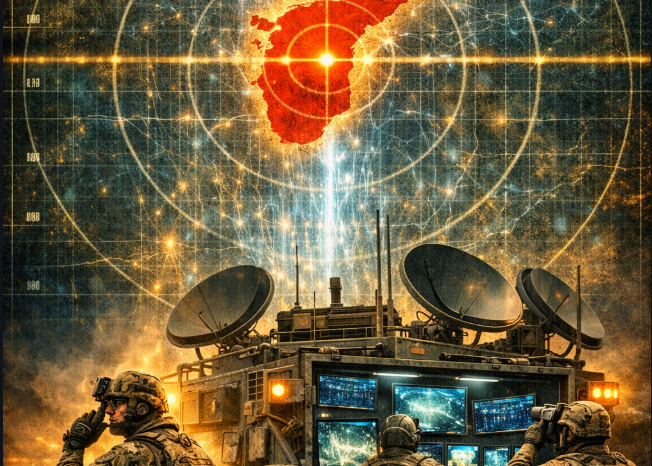
You’ll be in the room where planners, operators, scientists, and builders argue honestly, then commit to choices that carry consequences immediately. You’ll watch how investment choices unlock (or deny) capability pathways, then you’ll help make decisions where those capabilities are translated into force design options and employed across scenarios where the adversary hunts logistics, degrades command and control, and punishes hesitation. In that friction, the Air Force’s questions become yours: What breaks first? What scales? What survives contact? What must doctrine say, clearly, repeatably, so Airmen can win when the network degrades and the timeline compresses?
Most people outside the Department of Defense never get to experience this crucible where concepts become operational habits and words become decisions. Within this incredible opportunity, you don’t just observe the future of doctrine; here, we will rely on your help to pressure-test it, refine it, and strengthen it for 2035 and beyond, and it will change how you see airpower as a key component to national defense.
Come to the table prepared to be precise, skeptical, and constructive. Treat each challenge as a rehearsal for force design in contact: identify what breaks first, what fails silently, what creates compounding advantage, and what demands doctrinal revision rather than tactical workarounds.
Doctrinal superiority in 2035 will not be part of a nicely bound document for the future. These exploratory exercises will show how the Air Force will make the concepts learned and tested here an operational habit, built by people willing to interrogate trade-offs, trace consequences, and convert emerging technologies into repeatable ways of fighting and winning.
The Air Force Doctrine 2035 wargame is where the future of Air Force Doctrine begins.